
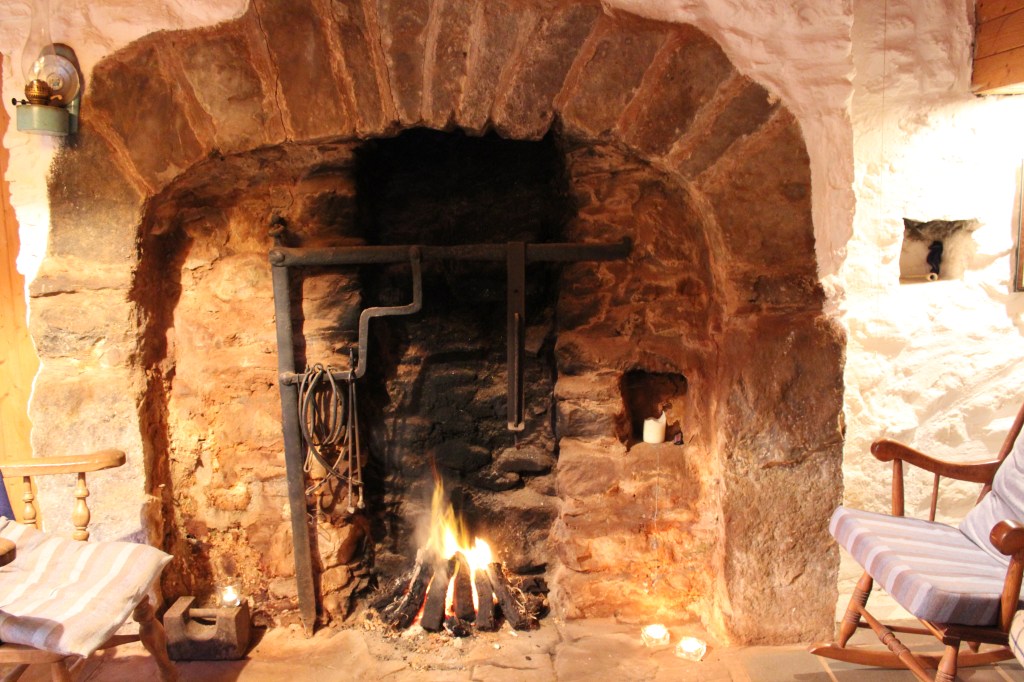
We sometimes sing a hymn that says: God is “Our shelter from the stormy blast And our eternal home.”
That may come as a surprise to someone who has a concept of God as a distant, austere accountant or judge, but it is not uncommon in the Bible. Listen to these Old Testament words picturing God as a refuge:
God is my strength and my fortress God is my high tower He is my shield, my stronghold, my support He covers me He hides me under the shelter of his wing He is my hiding place He is my rock He is my refuge, my shelter in times of trouble
All of these reveal the God we can run to for help and protection in the midst of major and minor crises in our lives. Those who wrote the psalms seemed confident in writing that they could find protection in their struggles, even life and death struggles. We never need to be ashamed when we ask God for refuge.
Many people cry out to God in the midst of an emergency, as if they are in a foxhole and bombs are exploding around them, but after they have survived, they go back to their ordinary lives. Yet God wants to invite us to something deeper.

A shelter from a storm is temporary and probably not a place to live long term. Even the hymn quoted above moves quickly from God as short term shelter to God as permanent, eternal home.
After I have been travelling or out for a tour of the lovely Irish countryside, I can’t wait to get home. Home is a special place. Even though it may not always measure up to the ideal, we picture it as a place where we can relax and be ourselves. It is where we know we belong. It is the launch pad for everywhere else we go. Home is often about family, either in the past or the present. We may display photos of people who are important to us. We keep some things that are significant. Even if our homes are less than perfect, the word “home” resonates deeply within us. It is something that everyone longs for – a true home.
What does it mean that God is our eternal home?
I believe it all revolves around Jesus. John’s writing contains lots of clues about the answer to the question of God as our home. In John 1, we read that Jesus was born and dwelt, lived, made his home among us. He belonged to a family, a neighborhood, a village, a nation.
We read that John the Baptist began his ministry, and one day Jesus came to be baptized. John called him “The Lamb of God” and said, “he will reveal God to Israel” and “I testify that he is the Chosen One of God”.
Andrew and another man heard John the Baptist say this and ran after Jesus. “Where do you live?”
Jesus said, “Come and see.”
I have a feeling that the house they followed him to was nothing special. Instead, he himself made it extraordinary. His words and his personality changed a room from being very normal, with a table and places to sit or recline with a simple meal, changed it into a place with an eternal quality. Andrew left after being with Jesus awhile and went to fetch his brother. “I’ve found the Messiah.” And they went back and began following Jesus.
Through his whole ministry, Jesus taught his followers about the family of God. Think about it: how often did he talk about a loving heavenly Father, and tell us to pray saying, “our Father, who art in heaven…” He constantly reminded his followers that God is good, that he has compassion and cares about us, that he gives to us abundantly. It is the kind of ideal Father each of us has longed for in our lives.
And then the wonderful promise: “For those who believe in Jesus, he gives them the right to become the children of God”, this amazing, loving heavenly Father.
One writer points out that most of the people who followed Jesus or the apostles in the early church had little or no status. They were simple people, some were slaves, some were women with no position or standing, most were ordinary. And suddenly, they had the right to become children of God, a personal membership in this family circle. They were nobody and now they were somebody. They had had no self-worth, and now they had all the rights and privileges of valued, beloved children in this mighty family.
And that applies to us as well. Jesus, God’s Son, died on the cross to take away our sin, and that gives us access into this family of God through faith. We belong. It doesn’t matter how young or old, what color our skin, our background or nationality, our income or education level, what language we speak. It is a family that extends beyond any one church or denomination to include everyone who believes in Jesus and his promises. We belong to this family, the family of God.
Jesus said abide, live, remain in me and I in you. He is our home.
He said, I go to prepare a place for you that where I am you may be also. He is our eternal home.

 Molly Deatherage